January 9, 2012

The Last Nizam- Part 2


In 1972 Mukkaram Jah saw some disquieting writing on the wall- the abolition of privy purses to princes and maharajas – he decided to look to other countries and lifestyles for his future.
Researching into some journals of 1980s and rare interviews to Hugh Schmitt. One can get into the mind of the last Nizam of Hyderabad on why he selected Australia as his next destination.
Why the down under - “I wanted to retain my individuality, and knowing and respecting Australians as a nation of individuals, I decided to come here. But I chose Perth quite by accident, “ Mukkaram Jah told an australian newspaper 12 years after he landed in Perth.
After he was told about Government of India's stand on the rulers – Mukkaram sitting around with a personal assistant at his Chiraan palace in Hyderabad was discussing his next move. Suddenly he remembered he had two friends in Perth. Both doctors whom he met at Cambridge. Next week he was on a flight to Perth.
Jet landed at Perth at 2 am – and Nizam suddenly wanted to go ahead to Sydney rather than visiting Perth. His assistant made him stay in Perth. He was booked into the Transit Inn about 3 am on Sunday morning and at 12:30 pm he walked into Pier Street.
Easy going life with clean and uncrowded city – was the punch to Nizam to stay here. That's how his long association with Western Australia began.
People in the region respected him and he made it sure that they addressed him Jah rather than Prince Jah.
Mukkaram loved the sea – not the sea between Fremantle and Rottest, but the open sea.” “I once sailed my yatch Kalbarrie from Fremantle to Port Moresby, which is more than a trans-Atlantic crossing,”he said.
He was dismayed when the Federal customs department ordered his 300 tonne converted US minesweeper Kalbarrie to leave Success Harbour in 1982 because it did not conform with Department of Transport Regulations.
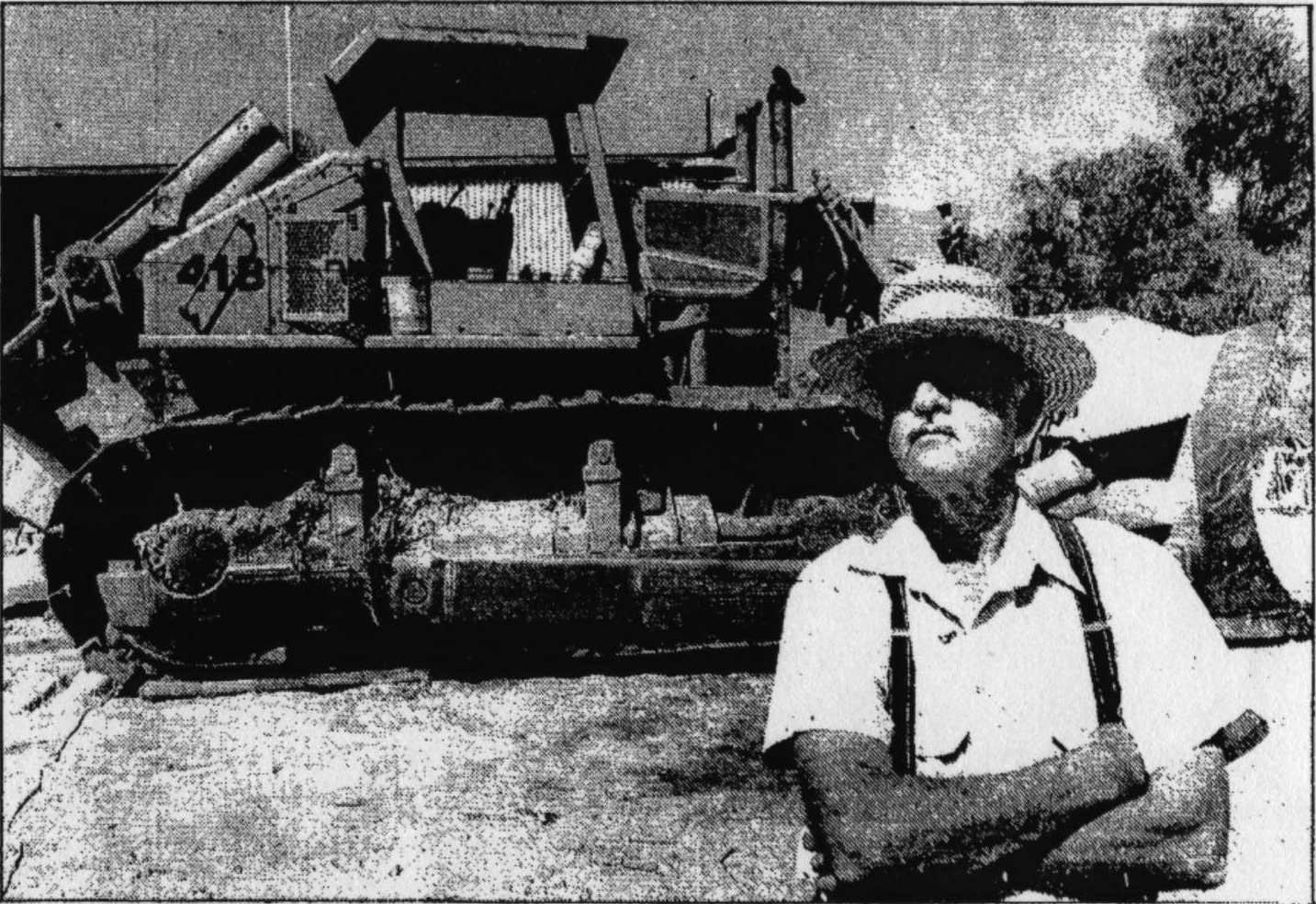
In Western Australia he is known as a sheep farmer who liked to tinker with heavy machinery and ride motor cycles cross-country on his 200,000 ha station called Murchison House, which is near Kalbarri.
He always was in offence whenever someone spoke about his grandfather reputation as a mean man who smoked discarded cigarette butts, despite an annual income of more than $500 million. He responded strongly - “Seventh Nizam was not mean. He might have been frugal in his own way but what is frugality,” he would question.
Mukkaram never directly spoke to his grandfather. “ I never spoke to him directly,” he recalled – I was in his presence, but spoke to him through a chamberlain. “My grandfather would ask to the assistant: Ask my grandson how he is doing at school,' and he would ask me the question.
“I would respond with something like: 'My honoured grandfather. I did well in my term exams.”
Born in France of a Turkish mother, he made it clear that he is more Turkish than Indian – and he looks to it.
He avoids media. Because he doesn't want any publicity. He knows that he is the nizam of Hyderabad and that's all matter.
“I am enjoying my second marriage to Ayesha much more than the first.”
NEXT: On his wives and controversies.

September 26, 2011

The Last Nizam – Part 1


I always wanted to write on Nizams of Hyderabad. The inside story. Not the ones - told and heard many a times. In next following days – I will write stories on the last nizam – Mukarram Jah which many didn't know. The first part is an introduction and a start up to my series.

I always wondered by the last Nizam of Hyderabad, Mukarram Jah abandoned the opulence and intrigues of his Hyderabad palace to drive bulldozers on a dusty sheep station in the Western Australian outback.
Mukarram was an offspring of the union of the two greatest Muslim dynasties of their time. Through his Indian grandmother, he was a descendant of Prophet Mohammed; through his Turkish mother, a descendant of the last Caliph of Turkey.
The first Nizam Mir Qamar Ud Udin Khan was a preacher who wanted to serve under Shahjahan. However, by the time he came back from Haj – Aurangazeb took over the rule and sent himto represent Mughals and fight against the Qutub Sahi rulers.
The Asif Jahi dynasty had been founded in bloodshed and intrigue in the 17th century under the Mughal emperors and in 1724 became an independent state. Since then the city and the state of Hyderabad had been synonymous with culture, opulence and intrigue.
At 35, Mukarram inherited the title from his grandfather, after he disinherited his son for being a "moral pervert" with "sadistic" tastes. Azam Jah.
Though by the time Mukarram was made the Nizam – India was independent and princely rule was over. But Osman Ali Khan had a deal with the Government of India to recognise his grandson as the last official Nizam.
His official title, as it was proclaimed by the president of India in 1967, was "His Exalted Highness, the Rustam of the Age, the Aristotle of the Times, Wal Mamuluk, Asaf Jah VIII, the Conqueror of Dominions, the Regulator of the Realm, Nawab Mir Barakat Ali Khan Bahadur, the Victor in Battles, the Leader of Armies, the Nizam of Hyderabad and Berar."  It may have been meaningless, as the princely states had ceased to exist, but the Maharajahs were allowed to retain their titles until 1971.
I was told by close associates of Mukarram and those who knew the Nizam closely that was more of a foreigner in Hyderabad as most of his time was spent aboard including his studies.
At the urging of his beautiful, cultivated mother, and against his grandfather's wishes, Mukarram was sent to Doon School, then to Harrow, Cambridge and Sandhurst in England. His mother despaired of his obsession with machinery.
Mukarram Jah, the new Nizam, brought in his own guards to safeguard his inheritance, but the looting began almost immediately and continued for decades. On April 6, 1967, a Mughal-style durbar was held to install him. At the end of the ceremony, the Olds-mobile that was to carry the royal couple broke down. Amid the solemn ritual, the exotic splendour and a crowd of tens of thousands all Mukarram could think of was how he would fix the imported V8. 
Five years later, the seventh Nizam's teeming beneficiaries were still contesting the 54 trusts he left behind. In 1971, Indira Gandhi had stripped the 279 remaining princes of their privy purses and titles. Overwhelmed by his lot, Mukarram flew to Western Australia and bought Murchison House Station, 160km from Geraldton and Havelock House (a Federation mansion) in Perth. 
A 2,00,000-hectare outback station in Western Australia was purchased in 1972. He immediately fell in love with his purchase, with its openness and space as it was as far removed from the incestuous atmosphere of Hyderabad, where his own father was taking him to court. "Abu Bakar (the first Caliph of Turkey who was his ancestor) was a shepherd, so I see no reason why I shouldn't be one," he once told a reporter. He would wear an Akubra hat, a dusty blue boiler suit and R.M. Williams work boots. His Turkish wife, Esra, appalled by the informality and isolation, returned to London in nine days. The locals treated and greeted him not with deep bows and salutations of "Your Exalted Highness" but with How yer doin', Mukarram or Jah? Some even called him Charlie. Mukarram claimed to have personally graded 300km of roads and fence lines at Murchison House Station.
While he lived in Australia, the plunder of his properties and possessions in India was reaching epidemic proportions. Most of the valuables he left behind in India were sold off by the mid-1970s by his managers, cronies and family members. Projects on his Australian property were abandoned midstream, managers were regularly replaced. Mukarram would drive across Australia and then charter a Lear jet to get home. Murchison was strewn with abandoned graders, tractors and cars. On April 1, 1996, a liquidator was appointed for the property. Mukarram felt cursed and left Murchison that year to flee to his mother's homeland and a modest two-bedroom flat on the coast of Turkey.

His second marriage ended in tragedy. His Australian wife developed a relationship with a bisexual, divorced Mukarram and then died of AIDS in 1989. His younger son from this relationship died of a drug overdose in 2004. Mukarram got married 5 times and has now separated from his current Turkish wife.
In 1967, Mukarram inherited the largest fortune in the world, but now lives a life of simplicity and anonymity in Turkey.

NEXT: Exclusive Interview of Mukarram given to an Autralian newspaper days after he landed in Australia. An insight on why Australia. And also an answer to my question why he left opulence and intrigues of his Hyderabad palace to drive bulldozers on a dusty sheep station in the Western Australian outback.

August 25, 2011

GADDAFI, OR QADDAFI, OR KADHAFI, OR KHADAFY ...?


Take a look at any news source today and you’ll see the name of Libya’s de facto leader, Muammar al-Gaddafi. Look a little closer and you’ll see a multitude of spellings for the notorious politician’s surname such as Gaddafi, Kadafi and Qaddafi. Why does a name that has been making headlines for decades have so many varied spellings?
Transliteration is the reason – the transcription of a word, or in this case a name, into corresponding letters of another alphabet. The Arabic script is oftentimes unvocalized – in other words the vowels are rarely written out and must be furnished by a reader familiar with the language. As with Chinese and Hindi, the Arabic script contains a copious amount of diacritics – dots and accents added to a letter to change the sound. In addition, there seems to be an absence of any sort of authority for transliterating Arabic names.
The Arabic language is one of the most widely spoken Semitic languages in the world and the pronunciation of words varies with different across regions. Even among Arabic speakers, Arabic of North Africa is often incomprehensible to an Arabic speaker from the Gulf Region.
A famous roadblock for any Arabic to English translator is the Arabic “q”.” Depending on the region, pronunciation varies so much that the first letter of “Gaddafi” can be replaced with a “q”, “k” or “gh” sound. This helps to explain the numerous interpretations for “Gaddafi.”
The variation of spelling may depend on what news source you choose to gather your information from. The Times of India, Hindustan Times and other news papers in India along with the Associated Press and CNN favor “Gadhafi”, The New York Times spells it “el-Qaddafi” and the Los Angeles Times uses “Kadafi.” Interestingly, Al Jazeera, which uses “Gaddafi”, does not use the “el” article in the name while the New York Times does.
It is the original Arabic spelling that causes problems for those of us who use the Latin alphabet. The first letter of Gaddafi's name is Qaf in Arabic, which is, phonetically speaking, a voiceless, uvular plosive. It's like a K, but instead of the tongue making contact with the soft palate it is further back and touches the uvula. This explains why several Arabic words are spelt different ways - either Q or K - in English, eg Koran/Q'uran, burka/burqa. There are different dialects of Arabic, and in the Libyan dialect this letter often sounds like a G, hence the English spelling. The next letter is ḏāl or dhal, which is a voiced dental fricative, like the 'th' sound in the word 'these'. In Libya, this letter is often pronounced more like a D or Z.
According to the Associated Press Gaddafi pronounces his name Gath-thafi. As for the way he spells his name, back in the 1980s when he would print his name in English at the end of letters to the West he wrote El-Gadhafi. The Associated Press still uses the spelling Gadhafi, but without the El.

January 10, 2011

A day at LBSNAA


COMPLETELY awestruck and mesmerised by the serene beauty of Mussoorie. Last November I was invited to deliver a lecture on ground realities faced by bureaucrats when they come across media in rural areas of the country.
An hour long session at Lal Bahadur Shashtri National Academy of Administration (LBSNAA) taught me many things – especially how important it is for media to get into introspection to give a clear image of its non bias and non corrupt professionalism.
More than 270 odd probationers from IAS, IPS, foreign and forest services were armed with questions which were dipped and darkened in the inkpot of negative reports. The probationers of 81st foundation course looked more promising and ready to take the challenge – attitude. It looks the new batch of bureaucrats the country is going to have is promising.
In past I have had extensively worked covering bureaucracy – but very few people left impression. One of the them was Gaurav Dwivedi who happens to be senior Deputy Director at LBSNAA. It was his idea of including a media session for the probationers in the foundation course. That is how I happened to be a part of the session.
Mr Dwivedi is basically a Chhattisgarh cadre IAS officer – who had worked as Collector in three districts of Chhattisgarh before opting for central job.
Probationers might think that it is just a regular part of session with media – but the reason behind Mr Dwivedi including it in the foundation course has its own significance. Many a times due to lack of knowing the scenario and mishandling of media – the bureaucrats end up biting the dust.
Usually the young bureaucrats mess up things quite often when it comes to media handling during early days of postings.
Most of the time wherever I was invited to deliver lecture the audience were mostly media persons or students. But talking to 'would be' bureaucrats was a different ball game.
I was told most of them would sleep in the class or read books – and I would be left talking to myself or the walls or some probationers who would be kind enough to pay attention.
First few minutes was boring and I could sense it myself. I remembered Mark Twain's quote for the journey -
Twenty years from now you will be more disappointed by the things that you didn't do than by the ones you did do.
So throw off the bowlines. Sail away from the safe harbour. Catch the trade winds in your sails.
Explore. Dream.


That's what I told them to give a patient hearing and you will not regret on listening to me. I believe they heard me well.
After the session was over – I was happy that I was walking away not only with the souvenirs from LBSNAA but also lesson on public speaking and how to keep the audience exceeding in hundreds. There are different facets of expression. Public speaking in an art of expressing a point, suggestion or also a medium of gentle persuasion. The motive is to give something to the discerning audience so that they can imbibe the skills in the speech.
At the end my respect towards politicians grew more – coz of their ability to keep audience at bay with their mesmerising speeches.

August 27, 2010

LIVE, EXCLUSIVE and ALIVE!


LAUGHED AND had fun over a movie which made mockery of my fraternity. For a change I did not mind. PEEPLI LIVE's visuals were afresh in my mind when one of my news coordinators called up last night to tell me that a woman had a dream that she would be dying at midnight.
I thought wow a TRP story! Lot of things were wrestling in my mind. Should we send an OB van to monitor her movements live till she kicks her bucket. And run a scroll saying few more hours before this lady bid adieu to life. Will she die or not! Why she had this dream! Then good senses prevailed – we didn't give it a damn attention and as expected it turned out to be a bluff.
For people who watched Peeli Live and had riots of laughter over the manner media functioned. Let me tell them it is based on a true story which was reported in October, 2005 in a village in Madhya Pradesh. The only difference is in the real story it was not a farmer but an astrologer.

Indian Express carried an interesting story about the entire episode. I still remember it. Let me tell you guys what happened on October 20, 2005.

Let's begin at the very end: Pandit Kunjilal, self-styled astrologer, is alive and well and living in Betul, Madhya Pradesh. At precisely 4 pm, Kunjilal (according to Star News’ correspondent) coughed. He drank some water and as Sahara’s correspondent reported in offended tones, ‘‘suddenly rose one hour early’’ from his certain death. Asked to explain the postponement of his date with darkness, the smiling media star of the day replied that it was all due to good wishes, prayers. ‘‘And how long do you propose to live, now?’’ demanded a disappointed TV journalist. Kunjilal grinned broadly: ‘‘God knows how long I will live.’’ Coming from a man who had predicted that he would die today between 3pm and 5pm that’s really funny.
3 pm onward: TV news channels Star News, Aaj Tak and Sahara who took Kunjilal at his word and devoted hours of live transmission time to his close encounter with death, were, like Queen Elizabeth II, not amused. He had spoilt their headlines. ‘‘Aaj Meri Mauth Hai (Star News), ‘‘Aaj Maroonga’’ (Aaj Tak), sound infinitely more filmi than ‘‘Mauth ka drama khatam’’ (Star) or Aaj Tak’s tame, ‘‘Mauth Talli ’’ (death postponed).
What went through Kunjilal’s mind during what he believed were his last few hours (did he do it to come on to the ‘‘video’’ asked one reporter, nastily) we will never know. All we saw was a man looking half asleep. However, these TV news channels knew death is a serious matter. So they took Kunjilal’s prediction very seriously. Fearing that he might pop it while they popped off for ‘‘ek chhota sa break,’’ Sahara simply stayed put outside his hut in Betul, and listened to people celebrating the event with dholaks and songs and posted regular updates on his health: ‘‘Doctors say he is fit.’’
As the leading news channels in the country, Aaj Tak and Star News (or is it the other way around?) felt it was their duty to treat the occasion greater solemnity. So they held studio discussions. Aaj Tak asked its resident astrologer for the day, K.N. Rao if people could accurately predict their own death. ‘‘Of course it can happen,’’ replied he gravely, adding that his analysis of Kunjilal’s kundali, indicated the strong possibility of his imminent departure. This outraged the General Secretary of the Rationalist Society in Kolkata, Probir Ghosh who went ‘‘pooh-pooh’’ or more polite words to that effect. His disparaging comments offended another astrologer, Acharya K. Arora who said he had no business criticising astrology. It was time for Dr. Vohra to referee. He took KBC’s 50:50 route: ‘‘Astrology is a very deep science but there is a lot of superstition in this country.’’
Meanwhile, where was poor Kunjilal? Left to die in Betul while they slugged it out in the studio. Star News and Sahara also staged it like a WWF wrestling bout between The Rationalist and The Astrologer. However, Star’s sympathies lay with the latter and, in particular, Prem Kumar Sharma from Chandigarh. As 4 pm neared and Kunjilal was obstinately still breathing, the anchor quizzed Sharma:‘‘But what if the time (of birth?) was 8? Or 8.30? Or 9?—is death a possibility then?’’ insisted the earnest anchor knowing this was a matter of life and death. Sharmaji was most unhelpful: No, 8 is not possible, 8.30 is not possible and nor is 9.
3.51 pm: Sahara’s reporter in Betul was losing his enthusiasm: ‘‘The clock is ticking on but it doesn’t look like he will die.’’ Indeed, Kunjilal was nonchalantly fanning himself. We saw doctors going into check him out—2 minutes to go, said the correspondent in a space-shuttle countdown voice but Kunjilal was not for, er, lifting off. Star News turned for help to the public outside Kunjilal’s home who dismissed the entire thing: ‘‘Nothing will happen—this place is just very superstitious. I only came because all your TV channels were carrying the news.’’
3.58: Just before the appointed hour, Aaj Tak and Star News went for a commercial break, no doubt unable to bear the tension. When they returned, it was to announce Kunjilal calling off his death vigil because the worst (time) was over. But the channels were not giving up so easily. Feeling almost cheated by his living, they flogged the story to death. On Aaj Tak, it was a triumphant smiling rationalist Ghosh versus Rao until a weary Rao could be heard asking ‘‘How long will this go on?’’, while on Star News, astrologer Sharma felt that Kunjilal probably staged the entire drama for media attention.
4.20: In the absence of Kunjilal, his son and daughter took over on Aaj Tak to say how happy they were daddy was alive and how poor mummy-ji had fallen asleep. The channels were getting very tetchy now—having exploited and been exploited by Kunjilal, the channels now turned on him: Sahara Breaking News: ‘‘Khatam hua natak’’, Astrologer Rao on Aaj Tak: It’s not right for an astrologer to predict such a thing.
And finally, Star News offered this by way of explanation for its behaviour: ‘‘It is always our aim to bring you the truth, so we stayed with the story. This was a drama, nothing more.’’ Never had a truer word been spoken.

August 4, 2010

Afghan woman symbolizes war stakes


Till date the famous Steve McCurry photograph of a young Afghan girl that adorned the cover of National Geographic magazine was the most memorable photo of green-eyed Afghan Girl which he clicked at some refugee camp in Pakistan.
But now there is another Afghan Girl photograph which has not only set to become memorable from my point of view but also raise questions on the fate of women in the war torn country. The two photographs taken by different individuals make your cerebrum work hard to look into the pain the individuals gone through in their own respective lives. It is not a mere photo to appreciate but life story to feel.
The face on the cover of Time magazine is graceful, composed and unthinkably maimed. The heart-shaped hole where 18-year-old Aisha's nose should be is a mark of Taliban justice _ a visceral illustration, the headline suggests, of "what happens if we leave Afghanistan."
The portrait has quickly becoming a symbol of the stakes of a nearly decade-old war. For me the photo is disturbing on so many levels but I think that it was completely necesaary, unfortunately. Interestingly, while I was reading comments on websites about the photo I found many people terming the cover page as avoidable and out-cried that the photo might affect children.
If the response proves it's still possible for pictures to provoke a visually saturated culture, it also shows how much viewers have come to accept graphic images.
Under orders from a Taliban commander acting as a judge, Aisha's nose and ears were sliced off last year as punishment for fleeing her husband's home, according to Time's story and other accounts. She said she fled to escape her in-laws' beatings and abuse.
Now in a women's shelter, she is set to get reconstructive surgery in the U.S., with the help of Time, humanitarian organizations and others.
Aisha posed for the Time cover photo because she wanted readers to see the potential consequences of a Taliban resurgence, the magazine said. Prominent Afghan women have expressed concerns that a potential government reconciliation with the insurgents could cost them freedoms they have gained since the 2001 U.S.-led invasion toppled the former Taliban regime.

April 15, 2010

A Village Of Twins


Hello are you Krishnan? No I am Ramesh, Krishnan's brother. Hi Gopanna how are you. Sorry I am Shaju, Gopanna's younger brother. Everytime I try to greet a person in this small but green village in Kerala – it turns out to be other person.
Turn a corner in Kodinhi village, and if you have seen one child you will probably run into its double soon after. In this community of 2,000 families there are 250 sets of twins. In 2008 alone, of the 300 families who had children, 15 pairs were born, a rate at least six times higher than the average for the country. India has one of the lowest twinning rates in the world, but Kodinhi is close to the top of the global twinning league.
Krishnan Sribiju, a doctor at the Tirurangadi Taluk hospital, just outside the village, said the number of twins born was increasing year by year. In the past five years, up to 60 pairs had been born, and the 250 pairs who had been registered understated the true total.
The high number of children with indistinguishable features makes life difficult for teachers. Abhi, 16, standing beside his brother, said: "I comb my hair to the right and he combs his hair to the left. I also have a mark on my neck. Apart from these differences there is nothing else."
"It's an amazing phenomenon to see a medical marvel occurring in such a localised place where the people are not exposed to any kinds of harmful drugs or harmful chemicals," said lKrishnan Sribiju who is studying the twin phenomenon.
Pathummakutty and Kunhipathutty, 65, are the oldest surviving twins in the village, with both only having a single name like many people in the village.
The youngest are Rifa Ayesha and Ritha Ayesha, born June 10.
Pathummakutty said being a twin was not always easy. She recalls how her family struggled financially when she was a child but laughs about the many times people would get mixed up between her and her twin sister.
At the local school, 15-year-old Salmabi said teachers often confused her for her twin sister and she was once reprimanded for something that her twin did.
"It happens all the time," the students pipe in chorus.
Sribiju said scientists were still trying to unravel the mystery of the high number of twin births, believing there must be something in the environment that is causing this such as something in the water.
Some locals also believe it is to do with the water as Kodinji is surrounded by water in the fields and during the monsoon season it becomes inaccessible due to heavy rains.
Most of the twins are non-identical, which means that the mothers are producing extra eggs that are fertilised at the same time. Identical twins develop from a single embryo that splits after fertilisation.
The National Geographic is planning an hour-long documentary with a working title ‘Twin Town.’ Paul Nelson, producer-director of the documentary, says it will be a genuine attempt to get to the bottom of the matter.